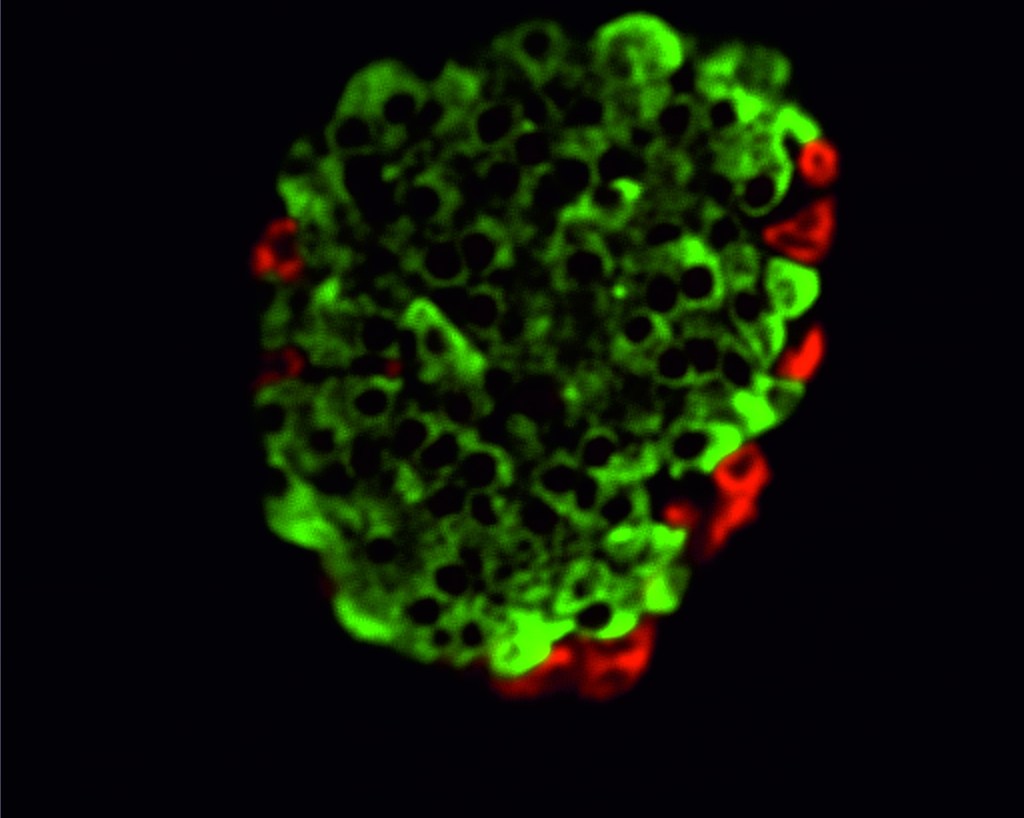
Recently, it has become evident that diabetes is not only a disease of reduced insulin signaling and secretion, but a bi-hormonal disease where the hormone glucagon contributes to the pathologically high blood glucose levels. Glucagon is a counter-regulatory hormone. During periods of fasting and starvation, circulating glucagon maintains blood glucose levels by increasing hepatic glucose production. Glucagon is secreted by the alpha cells in the pancreas in response to reductions in blood glucose concentration. Despite nearly a century of research on these glucagon-producing alpha cells, our understanding of their function and the mechanisms controlling glucagon secretion remains limited.
Our research aims to understand how glucagon secretion is regulated, how alpha cells interact with their surrounding environment, and how changes in alpha cell function impact glucose metabolism.
Funded by:




 jgk-lab.org